
A water bottle is a portable container designed to carry drinking water and other beverages. Whether you’re heading to work, school, the gym, or an outdoor adventure, a quality water bottle helps you stay hydrated throughout the day.
Modern water bottles are available in various sizes, materials, and designs. From lightweight plastic bottles to premium insulated stainless steel models, there’s an option for every lifestyle and budget.
Reusable water bottles have become increasingly popular because they reduce single-use plastic waste while providing a convenient way to carry beverages.
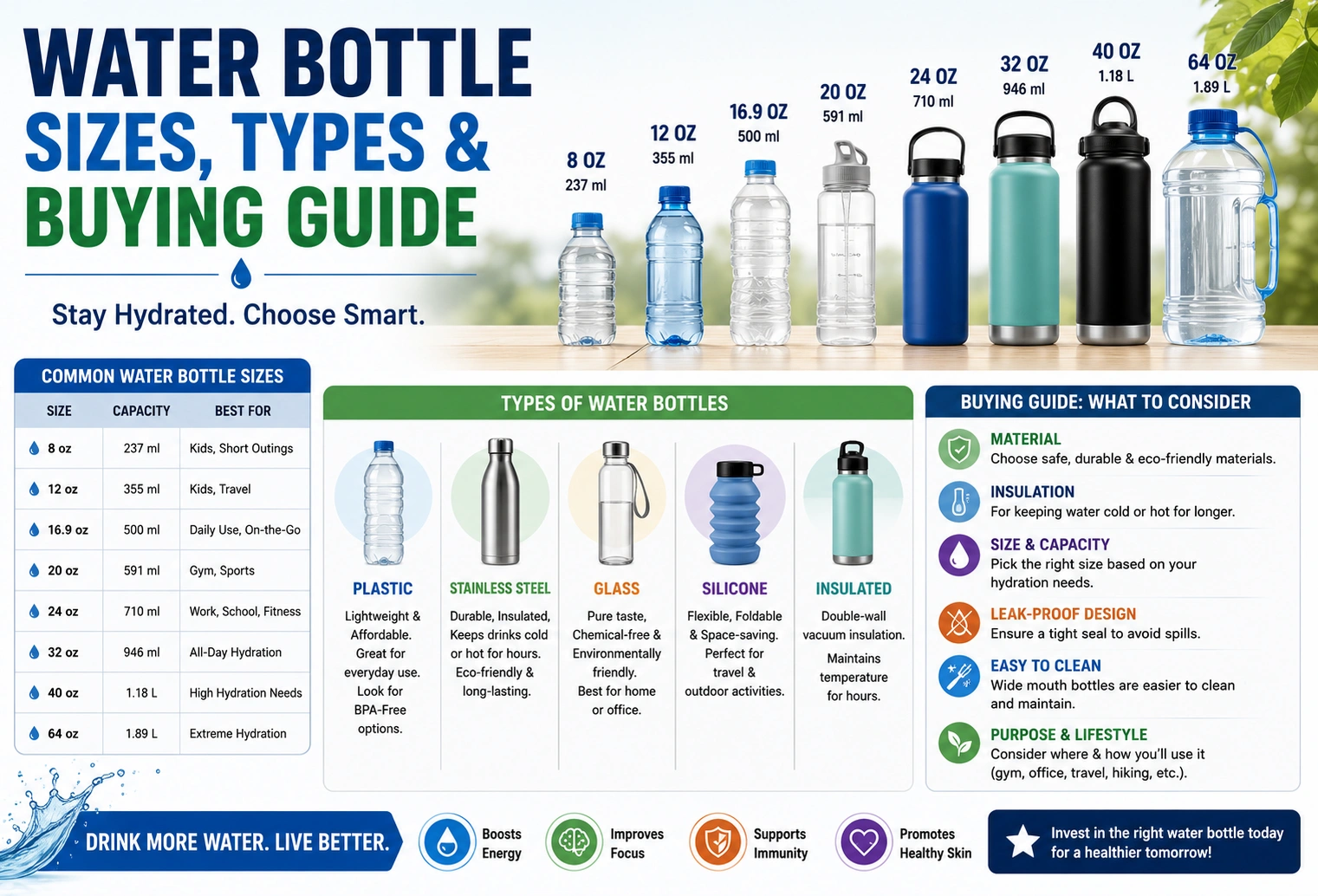
Common Water Bottle Sizes
Water bottles are available in many capacities to suit different needs.
| Capacity | Milliliters | Liters | Best For |
|---|---|---|---|
| 8 oz | 237 ml | 0.24 L | Kids |
| 12 oz | 355 ml | 0.36 L | Short trips |
| 16 oz | 473 ml | 0.47 L | Everyday use |
| 20 oz | 591 ml | 0.59 L | Office & school |
| 24 oz | 710 ml | 0.71 L | Gym |
| 32 oz | 946 ml | 0.95 L | Hiking & sports |
| 40 oz | 1,182 ml | 1.18 L | Long outings |
| 64 oz | 1,892 ml | 1.89 L | All-day hydration |
Choosing the right size depends on your daily water intake, activity level, and portability needs.
Types of Water Bottles
Plastic Water Bottles
Plastic bottles are lightweight, affordable, and widely available. Many reusable versions are made from BPA-free materials for improved safety.
Stainless Steel Water Bottles
Stainless steel bottles are durable, rust-resistant, and often feature double-wall vacuum insulation to keep drinks cold or hot for extended periods.
Glass Water Bottles
Glass bottles provide a clean taste and are easy to clean. Many include silicone sleeves for added protection against impacts.
Collapsible Water Bottles
Made from flexible silicone or similar materials, collapsible bottles save space when empty, making them popular for travel and hiking.
Insulated Water Bottles
These bottles use double-wall construction to maintain beverage temperature, keeping water cold for up to 24 hours or hot for many hours, depending on the design.
Best Materials for Water Bottles
| Material | Advantages | Considerations |
| Stainless Steel | Durable, insulated, long-lasting | Heavier than plastic |
| BPA-Free Plastic | Lightweight, inexpensive | Less effective at temperature retention |
| Glass | Pure taste, recyclable | More fragile |
| Silicone | Flexible, collapsible | Limited insulation |
Each material has its own strengths, so the best choice depends on how and where you’ll use the bottle.
Benefits of Using a Reusable Water Bottle
A reusable water bottle offers several advantages:
- Reduces single-use plastic waste
- Saves money over time
- Encourages regular hydration
- Available in insulated designs for temperature control
- Easy to carry during work, travel, or exercise
- Available in many sizes and styles
Using a reusable bottle is an environmentally friendly alternative to purchasing disposable bottled water.
How to Choose the Right Water Bottle
When shopping for a water bottle, consider the following:
Capacity
Choose a size that matches your daily hydration needs without being too heavy to carry.
Material
Select stainless steel, plastic, glass, or silicone based on your priorities for durability, weight, and insulation.
Insulation
If you enjoy cold water throughout the day or hot beverages in winter, an insulated bottle is a worthwhile investment.
Lid Style
Popular options include:
- Screw-top lids
- Straw lids
- Flip-top lids
- Chug caps
- Sports caps
Select a lid that’s comfortable and convenient for your activities.
Leak Resistance
A leak-proof design helps prevent spills in backpacks, gym bags, and car cup holders.
Water Bottle Care Tips
To keep your bottle clean and safe:
- Wash it regularly with warm, soapy water.
- Clean the lid, straw, and seals thoroughly.
- Allow all parts to dry completely before reassembling.
- Avoid leaving beverages inside for extended periods.
- Follow the manufacturer’s cleaning recommendations.
Proper maintenance extends the life of your bottle and helps prevent odors or bacteria buildup.
Common Mistakes
Buying the Wrong Size
A bottle that’s too small may require frequent refilling, while one that’s too large can be cumbersome to carry.
Ignoring Insulation
If temperature retention is important, choose a double-wall insulated bottle instead of a single-wall design.
Forgetting to Clean the Lid
Bottle lids, straws, and seals can collect residue and should be cleaned as thoroughly as the bottle itself.
9. FAQs
1. What is the best material for a water bottle?
Stainless steel is often preferred for its durability, insulation, and long lifespan, while BPA-free plastic offers a lightweight and budget-friendly alternative.
2. What size water bottle is best?
For most adults, 20–32 ounces (591–946 ml) is a practical size for daily use, though larger bottles are useful for extended activities.
3. Are reusable water bottles better than disposable bottles?
Yes. Reusable bottles help reduce plastic waste, can save money over time, and are available in durable, long-lasting materials.
4. How often should I clean my water bottle?
It’s best to wash your reusable water bottle daily, especially if you use it regularly or fill it with beverages other than water.
5. Can insulated water bottles keep drinks hot and cold?
Yes. Double-wall insulated bottles are designed to keep beverages cold for many hours and hot for extended periods, depending on the model.
10. Conclusion
A water bottle is more than just a container—it’s an essential everyday accessory that supports hydration at home, work, school, the gym, or while traveling. With options ranging from lightweight BPA-free plastic to premium insulated stainless steel, there’s a water bottle to suit every need and budget.
When choosing a reusable water bottle, consider its size, material, insulation, lid style, and ease of cleaning. Selecting the right bottle can help you stay hydrated, reduce environmental waste, and enjoy your beverages wherever you go.
Discover More Articles
Pokémon TCG Card Size: Official Dimensions & Measurement Guide
Weight of 5 Gallons of Water: Exact Pounds, Kilograms & More