
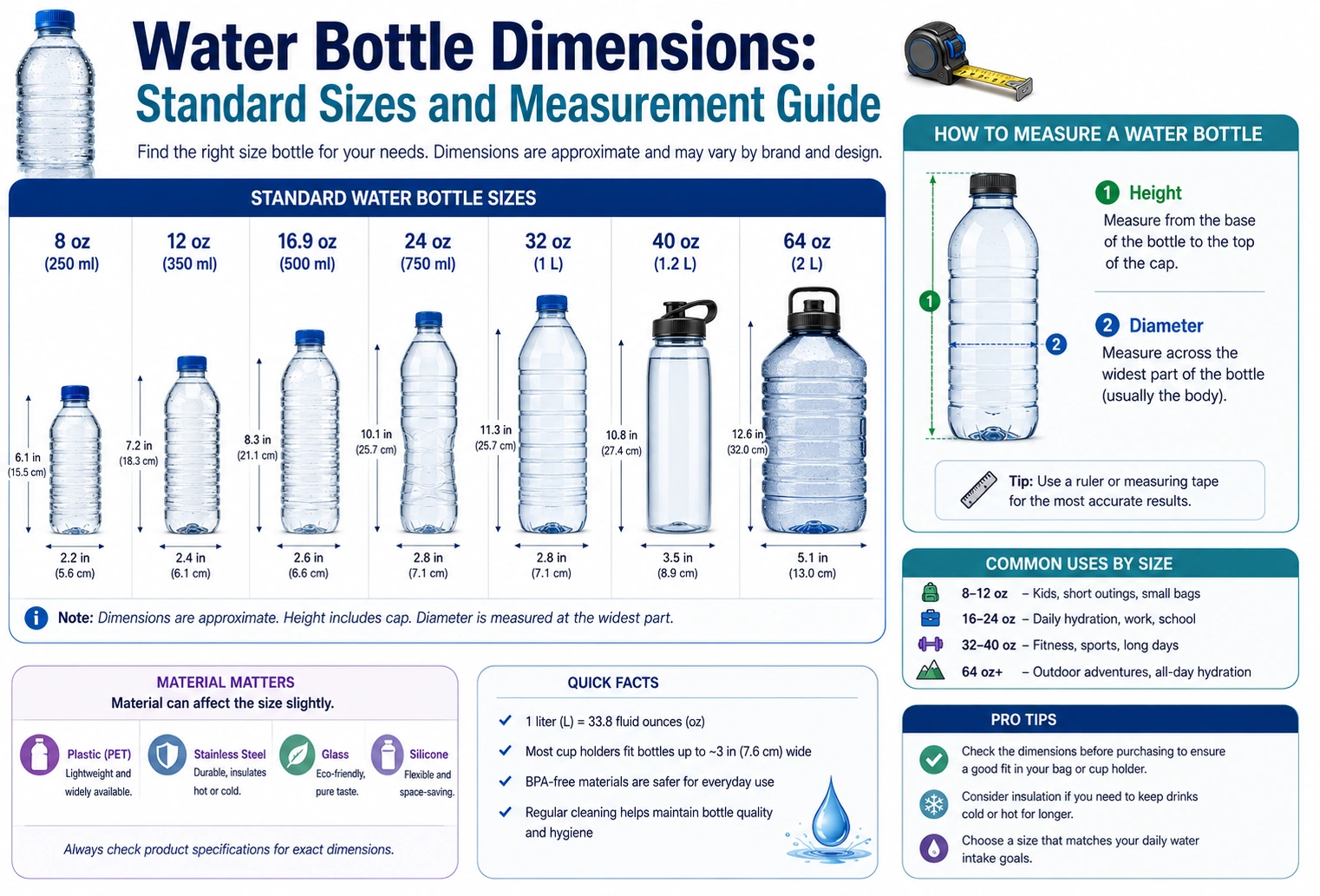
Understanding water bottle dimensions is important whether you’re buying a reusable bottle, designing product packaging, selecting a backpack, or simply choosing the right bottle for everyday hydration. Water bottles come in many shapes and capacities, but most follow standard size ranges that make them convenient to carry, store, and use.
The dimensions of a water bottle are usually described by its height, diameter, and capacity. These measurements determine how much water the bottle holds, whether it fits in a car cup holder, and how easy it is to carry during travel, work, sports, or outdoor activities.
In this guide, you’ll learn about standard water bottle dimensions, common bottle sizes, measurement charts, and practical tips for selecting the right bottle for your needs.
Quick Answer
Although dimensions vary by manufacturer, here are the typical measurements for popular water bottle sizes.
| Capacity | Approximate Height | Approximate Diameter |
|---|---|---|
| 8 oz (237 ml) | 5–6 in | 2–2.5 in |
| 12 oz (355 ml) | 6–7 in | 2.5–2.75 in |
| 16.9 oz (500 ml) | 8–8.5 in | 2.5–2.8 in |
| 20 oz (591 ml) | 8.5–9.5 in | 2.75–3 in |
| 24 oz (710 ml) | 9–10 in | 2.8–3.2 in |
| 32 oz (946 ml) | 10–11 in | 3.5–3.8 in |
These measurements represent average dimensions and may vary slightly depending on the bottle’s design and material.
What Are Water Bottle Dimensions?
Water bottle dimensions refer to the bottle’s physical measurements rather than just its liquid capacity.
The three primary dimensions are:
- Height – Measured from the bottom of the bottle to the top of the cap.
- Diameter – The width of the bottle at its widest point.
- Capacity – The amount of liquid the bottle can hold, usually measured in ounces (oz) or milliliters (ml).
Together, these dimensions help determine whether a bottle fits in cup holders, backpack pockets, lunch bags, or bicycle bottle cages.
Standard Water Bottle Dimensions
Most water bottles fall into a few common size categories.
Small Water Bottles (8–12 oz)
Small bottles are lightweight and easy to carry.
Typical dimensions include:
- Height: 5–7 inches
- Diameter: 2–2.75 inches
They’re ideal for:
- Children
- Short trips
- Lunch boxes
- School bags
Medium Water Bottles (16–20 oz)
These are the most popular everyday water bottles.
Typical dimensions:
- Height: 8–9.5 inches
- Diameter: 2.5–3 inches
They provide enough hydration for work, school, commuting, and light exercise while fitting in most vehicle cup holders.
Large Water Bottles (24–32 oz)
Larger bottles reduce the need for frequent refills.
Typical dimensions:
- Height: 9–11 inches
- Diameter: 3–3.8 inches
These bottles are commonly used for:
- Hiking
- Gym workouts
- Sports
- Long road trips
- Outdoor activities
Water Bottle Size Chart
The following chart compares common bottle capacities and their approximate dimensions.
| Capacity | Height | Diameter | Best For |
| 8 oz | 5–6 in | 2–2.5 in | Kids and travel |
| 12 oz | 6–7 in | 2.5 in | School and lunch |
| 16.9 oz | 8–8.5 in | 2.6 in | Everyday hydration |
| 20 oz | 9 in | 2.8 in | Office and commuting |
| 24 oz | 9.5–10 in | 3 in | Fitness and sports |
| 32 oz | 10–11 in | 3.5–3.8 in | Hiking and outdoor use |
This chart provides a helpful reference when comparing bottles before purchasing.
Common Water Bottle Capacities
Manufacturers produce water bottles in a variety of capacities to suit different lifestyles.
8 Ounce Bottle
A compact size often used by young children or for short outings.
12 Ounce Bottle
Popular for school lunches and compact bags where space is limited.
16.9 Ounce (500 ml) Bottle
One of the world’s most common bottled water sizes. It’s easy to carry and offers enough water for daily activities.
20 Ounce Bottle
Frequently used for sports drinks and reusable bottles designed for commuting or office use.
24 Ounce Bottle
A favorite among gym-goers and cyclists because it holds more water without becoming too bulky.
32 Ounce Bottle
Designed for extended hydration during hiking, camping, sports, or long workdays. While larger and heavier, it minimizes the need for frequent refills.
Plastic vs. Stainless Steel Water Bottle Dimensions
Capacity alone doesn’t determine a bottle’s size. The material also affects its dimensions.
Plastic Water Bottles
Plastic bottles typically have thinner walls, allowing them to hold more liquid without increasing the overall size.
Advantages include:
- Lightweight
- Affordable
- Easy to carry
- Widely available
Stainless Steel Water Bottles
Insulated stainless steel bottles generally have thicker walls due to their vacuum insulation.
As a result, they often have:
- Slightly larger diameters
- Greater overall weight
- Better temperature retention
- Improved durability
A 20-ounce insulated bottle may have similar capacity to a plastic bottle but occupy slightly more space due to its construction.
Choosing the Right Water Bottle Size
Selecting the right bottle depends on your daily routine, hydration needs, and where you’ll use it. While capacity is important, the bottle’s height and diameter also affect portability and convenience.
For Everyday Use
A 16.9 oz (500 ml) or 20 oz (591 ml) bottle is an excellent choice for most people.
Benefits include:
- Fits most car cup holders
- Easy to carry
- Lightweight
- Suitable for work, school, and errands
For the Gym
People who exercise regularly often prefer 24 oz or 32 oz bottles.
These larger bottles:
- Reduce the need for refills
- Keep you hydrated during long workouts
- Often include easy-sip sports lids
For Hiking and Outdoor Activities
If you’re spending several hours outdoors, consider a 32 oz or larger insulated bottle.
Advantages include:
- More water capacity
- Better temperature retention
- Durable construction
- Ideal for camping, hiking, and travel
For Children
Smaller 8 oz or 12 oz bottles are easier for children to hold and carry.
Look for bottles with:
- Leak-proof lids
- Lightweight materials
- Easy-to-clean designs
- Comfortable grip
How to Measure a Water Bottle
If you’re designing storage space, purchasing accessories, or comparing products, measuring a bottle correctly is important.
Measure the Height
Place the bottle on a flat surface and measure from the base to the top of the cap.
Measure the Diameter
Measure the widest part of the bottle from one side to the other.
This determines whether the bottle will fit in:
- Car cup holders
- Backpack side pockets
- Bicycle bottle cages
- Lunch bags
Check the Capacity
Capacity is usually printed on the bottle or product packaging.
Common units include:
- Ounces (oz)
- Milliliters (ml)
- Liters (L)
Will a Water Bottle Fit in a Cup Holder?
One of the most common questions buyers ask is whether a bottle fits in a standard vehicle cup holder.
Most car cup holders comfortably fit bottles with a diameter of 2.75 to 3 inches.
Generally:
| Bottle Size | Fits Most Cup Holders? |
|---|---|
| 12 oz | Yes |
| 16.9 oz | Yes |
| 20 oz | Usually |
| 24 oz | Often |
| 32 oz | Sometimes |
| 40 oz | Rarely |
Large insulated bottles may require a cup-holder adapter due to their wider base.
Water Bottle Dimensions for Bicycle Cages
Cyclists should also consider bottle diameter.
Most standard bicycle bottle cages are designed to hold bottles measuring approximately:
- 2.8 to 3 inches in diameter
- 20–24 oz capacity
Oversized bottles may not fit securely, so always check your bike cage specifications before purchasing.
Water Bottle Size Comparison Chart
The following chart compares popular water bottle sizes, capacities, and common uses.
| Capacity | Approximate Height | Approximate Diameter | Typical Use |
|---|---|---|---|
| 8 oz | 5–6 in | 2–2.5 in | Kids |
| 12 oz | 6–7 in | 2.5 in | School |
| 16.9 oz | 8–8.5 in | 2.6 in | Daily hydration |
| 20 oz | 8.5–9.5 in | 2.8 in | Office & commuting |
| 24 oz | 9.5–10 in | 3 in | Fitness |
| 32 oz | 10–11 in | 3.5–3.8 in | Hiking & travel |
| 40 oz | 11–12.5 in | 4–4.5 in | Extended outdoor use |
This comparison makes it easier to choose the right bottle for your lifestyle.
Common Mistakes When Choosing a Water Bottle
Focusing Only on Capacity
A bottle may hold enough water but still be too tall for your bag or too wide for your cup holder.
Ignoring Weight
Insulated stainless steel bottles are heavier than plastic bottles, especially when full.
Forgetting Cleaning Access
Wide-mouth bottles are generally easier to clean and allow you to add ice cubes more easily.
Choosing the Wrong Lid
Different lids are designed for different activities.
Popular options include:
- Straw lids
- Flip-top lids
- Screw caps
- Sports squeeze tops
- Chug lids
Choose one that matches your intended use.
Buying a Bottle That’s Too Large
While larger bottles reduce refills, they also occupy more space and become heavier when filled with water.
Balance capacity with portability.
Expert Tips for Choosing the Best Water Bottle
Match Capacity to Your Daily Routine
If you’re mostly indoors, a 20 oz bottle may be sufficient. For outdoor activities or long workdays, a 32 oz bottle can reduce the need for refills.
Consider Insulation
Double-wall insulated stainless steel bottles help keep drinks cold for many hours and hot beverages warm for extended periods.
Check Cup Holder Compatibility
If you commute by car, verify that the bottle’s diameter fits your vehicle’s cup holder before purchasing.
Look for Durable Materials
High-quality stainless steel and BPA-free plastic bottles generally last longer and withstand everyday use.
Prioritize Easy Maintenance
Dishwasher-safe bottles with removable lids and wide openings simplify cleaning and improve hygiene.
Frequently Asked Questions
What are the standard water bottle dimensions?
Standard water bottle dimensions vary by capacity, but most 16.9 oz bottles are approximately 8–8.5 inches tall with a diameter of 2.5–2.8 inches.
What is the most common reusable water bottle size?
The most popular reusable water bottles hold 20 to 24 ounces, offering a good balance between portability and hydration.
What is the diameter of a standard water bottle?
Most standard bottles have a diameter between 2.5 and 3 inches, allowing them to fit in most car cup holders and backpack pockets.
Are stainless steel bottles larger than plastic bottles?
Usually, yes. Insulated stainless steel bottles often have thicker walls, making them slightly wider than plastic bottles with the same liquid capacity.
How do I measure water bottle dimensions?
Measure the bottle’s height from the base to the top of the cap and its diameter across the widest part. Capacity is measured separately in ounces or milliliters.
Conclusion
Understanding water bottle dimensions makes it much easier to choose the right bottle for work, school, sports, travel, or outdoor adventures. While bottle sizes vary by manufacturer, most follow standard ranges based on height, diameter, and capacity, with common options ranging from 8 oz to 40 oz.
By comparing dimensions, checking cup holder compatibility, and selecting a capacity that matches your hydration needs, you can find a bottle that is both practical and comfortable to carry. Whether you prefer a lightweight plastic bottle or an insulated stainless steel model, knowing the standard water bottle dimensions helps you make an informed purchase and enjoy convenient hydration wherever you go.
Discover More Articles
How Long Until 3:30 PM? Easy Time Calculator Guide
Years Ago Calculator: Find the Date from Any Number of Years