
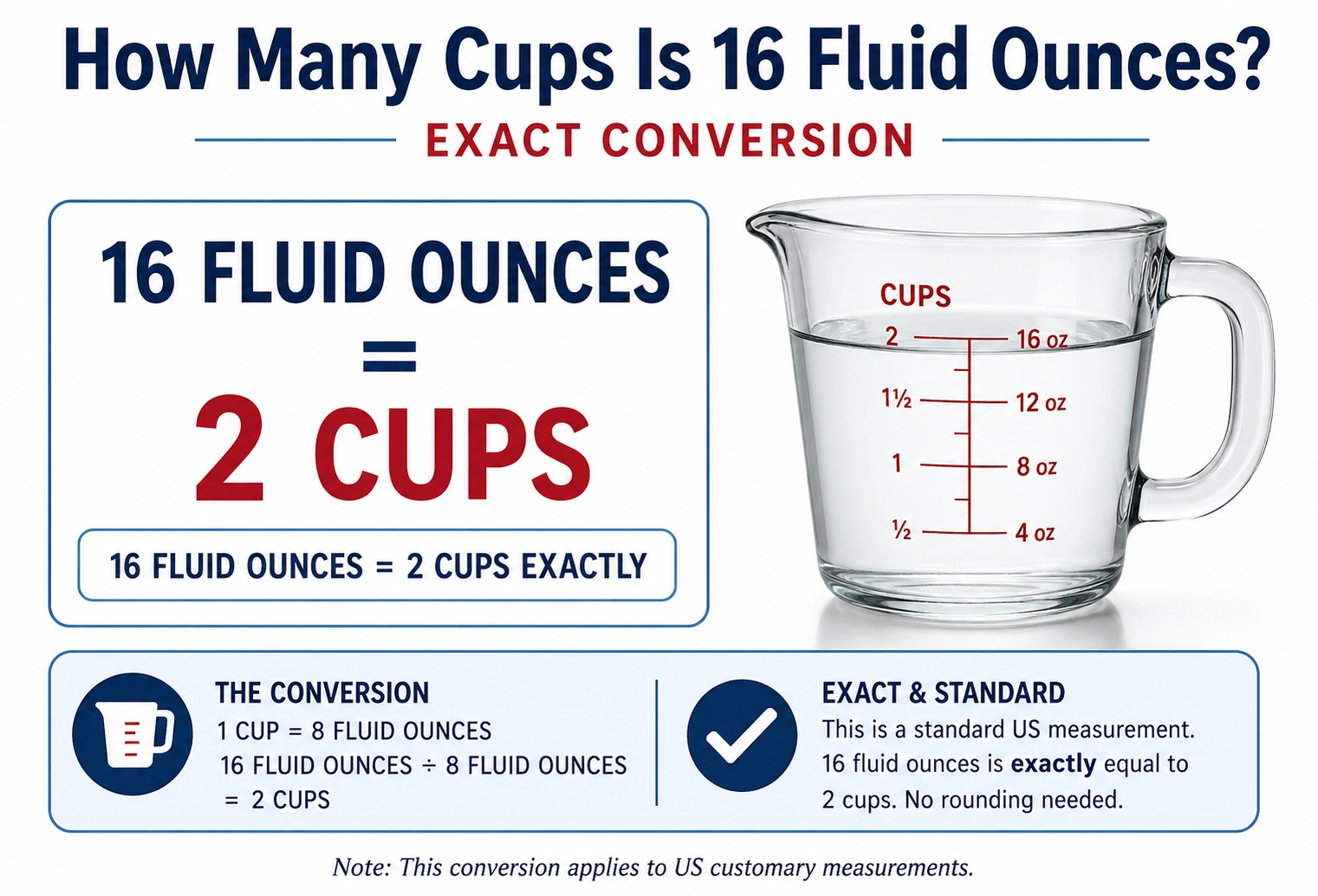
If you’re following a recipe or measuring beverages, you may wonder how many cups is 16 fluid ounces. Fortunately, the answer is simple and easy to remember.
16 fluid ounces equals 2 cups.
Since 1 U.S. cup contains 8 fluid ounces, dividing 16 by 8 gives:
16 ÷ 8 = 2 cups
Whether you’re cooking, baking, mixing drinks, or preparing meal portions, understanding this conversion can help you measure ingredients accurately and avoid recipe mistakes.
In this guide, you’ll learn how the conversion works, see handy charts, explore practical examples, and discover tips for measuring liquids correctly.
Quick Answer
| Fluid Ounces | Cups |
|---|---|
| 16 fl oz | 2 cups |
16 fluid ounces = 2 U.S. cups
This is one of the most common kitchen conversions and is frequently used in recipes.
Understanding Fluid Ounces and Cups
Before converting, it’s helpful to understand these two units.
What Is a Fluid Ounce?
A fluid ounce (fl oz) measures liquid volume, not weight.
Common liquids measured in fluid ounces include:
- Water
- Milk
- Juice
- Coffee
- Cooking oil
- Broth
Fluid ounces should not be confused with ounces used to measure weight.
What Is a Cup?
A cup is another unit of liquid volume commonly used in cooking and baking.
In the United States:
- 1 cup = 8 fluid ounces
- 2 cups = 16 fluid ounces
- 4 cups = 1 quart
Most U.S. recipes use these standard measurements.
How to Convert 16 Fluid Ounces to Cups
The conversion formula is simple.
Formula
Cups = Fluid Ounces ÷ 8
For 16 fluid ounces:
16 ÷ 8 = 2 cups
So,
16 fluid ounces = 2 cups
Why This Conversion Is Important
Many recipes list ingredients in different units.
For example:
- Beverage containers often show fluid ounces.
- Measuring cups display cups.
- Cookbooks may use either unit.
Knowing that 16 fluid ounces equals 2 cups helps you switch between measurements quickly without using a calculator.
Fluid Ounces to Cups Conversion Chart
Here’s a handy reference.
| Fluid Ounces | Cups |
|---|---|
| 4 fl oz | ½ cup |
| 6 fl oz | ¾ cup |
| 8 fl oz | 1 cup |
| 10 fl oz | 1¼ cups |
| 12 fl oz | 1½ cups |
| 14 fl oz | 1¾ cups |
| 16 fl oz | 2 cups |
| 20 fl oz | 2½ cups |
| 24 fl oz | 3 cups |
| 32 fl oz | 4 cups |
Common Kitchen Measurement Conversions
These conversions are useful in everyday cooking.
| Measurement | Equivalent |
|---|---|
| 1 cup | 8 fl oz |
| 2 cups | 16 fl oz |
| 4 cups | 32 fl oz |
| 8 cups | 64 fl oz |
| 2 cups | 1 pint |
| 4 cups | 1 quart |
| 16 cups | 1 gallon |
Learning these basic relationships makes recipe conversions much easier.
Real-Life Examples
Here are a few situations where this conversion is helpful.
Filling a Measuring Cup
If a recipe calls for 16 fluid ounces of milk, simply measure 2 cups.
Making Soup
Many soup recipes require 2 cups of broth, which equals 16 fluid ounces.
Preparing Smoothies
A smoothie recipe might call for 16 fluid ounces of almond milk, or 2 cups.
Drinking Water
Many reusable water bottles hold 16 fluid ounces, which equals 2 cups of water.
Baking Cakes
Cake recipes often require:
- 2 cups of milk
- 2 cups of water
- 2 cups of buttermilk
Each equals 16 fluid ounces.
U.S. Cups vs Imperial Cups
It’s important to know which measurement system your recipe uses.
U.S. Cup
- 8 U.S. fluid ounces
- Most American recipes follow this standard.
Imperial Cup
Some countries use different cup sizes.
For example:
- 1 Imperial cup ≈ 10 Imperial fluid ounces
Always check your recipe’s origin if precision matters.
Why Accurate Measurements Matter
Correct liquid measurements improve:
Baking Results
Too much or too little liquid affects:
- Texture
- Rise
- Moisture
- Flavor
Cooking Consistency
Proper measurements help recipes turn out the same every time.
Nutrition Tracking
If you’re counting calories or macros, accurate serving sizes matter.
Beverage Mixing
Cocktails, smoothies, and homemade drinks taste better when ingredients are measured correctly.
Common Conversion Mistakes
Avoid these common errors.
Confusing Fluid Ounces with Weight Ounces
Fluid ounces measure volume.
Regular ounces measure weight.
For example:
- 16 fluid ounces of water equals about 16 ounces by weight.
- Other liquids may weigh more or less.
Using the Wrong Measuring Cup
Use:
- Liquid measuring cups for liquids.
- Dry measuring cups for flour, sugar, and grains.
Ignoring Different Measurement Systems
Recipes from different countries may use different cup sizes.
Overfilling the Measuring Cup
Always place the measuring cup on a flat surface and read at eye level.
Expert Tips for Measuring Liquids
- Use a transparent liquid measuring cup with clear markings.
- Pour slowly to avoid spilling.
- Read the measurement at eye level.
- Measure over the sink when possible.
- For sticky liquids like honey or syrup, lightly coat the measuring cup with cooking spray for easier pouring.
Common Fluid Ounce to Cup Conversions
| Fluid Ounces | Cups |
|---|---|
| 1 | ⅛ cup |
| 2 | ¼ cup |
| 4 | ½ cup |
| 8 | 1 cup |
| 12 | 1½ cups |
| 16 | 2 cups |
| 24 | 3 cups |
| 32 | 4 cups |
| 64 | 8 cups |
9. Frequently Asked Questions
1. How many cups is 16 fluid ounces?
16 fluid ounces equals exactly 2 U.S. cups.
2. Is 16 fluid ounces the same as 2 cups?
Yes. Since 1 cup equals 8 fluid ounces, 16 fluid ounces equals 2 cups.
3. Is 16 ounces always 2 cups?
Only when referring to 16 fluid ounces (liquid volume) in the U.S. measurement system. Weight ounces are different and depend on the ingredient.
4. How many cups are in a 16-ounce water bottle?
A standard 16-fluid-ounce water bottle contains 2 cups of water.
5. Why do recipes use both cups and fluid ounces?
Recipes vary by author and region. Knowing both units helps you follow recipes accurately and convert measurements with confidence.
10. Conclusion
Understanding how many cups is 16 fluid ounces is one of the most useful kitchen conversions. The answer is simple: 16 fluid ounces equals exactly 2 U.S. cups. Whether you’re cooking, baking, mixing drinks, or tracking your water intake, this conversion helps you measure liquids accurately.
Remember the basic rule: 1 cup = 8 fluid ounces. By using this simple relationship and the conversion charts in this guide, you can confidently convert liquid measurements and achieve consistent results in every recipe.
Discover More Articles
1 Meter Is Equal to How Many Feet? Exact Conversion Guide