
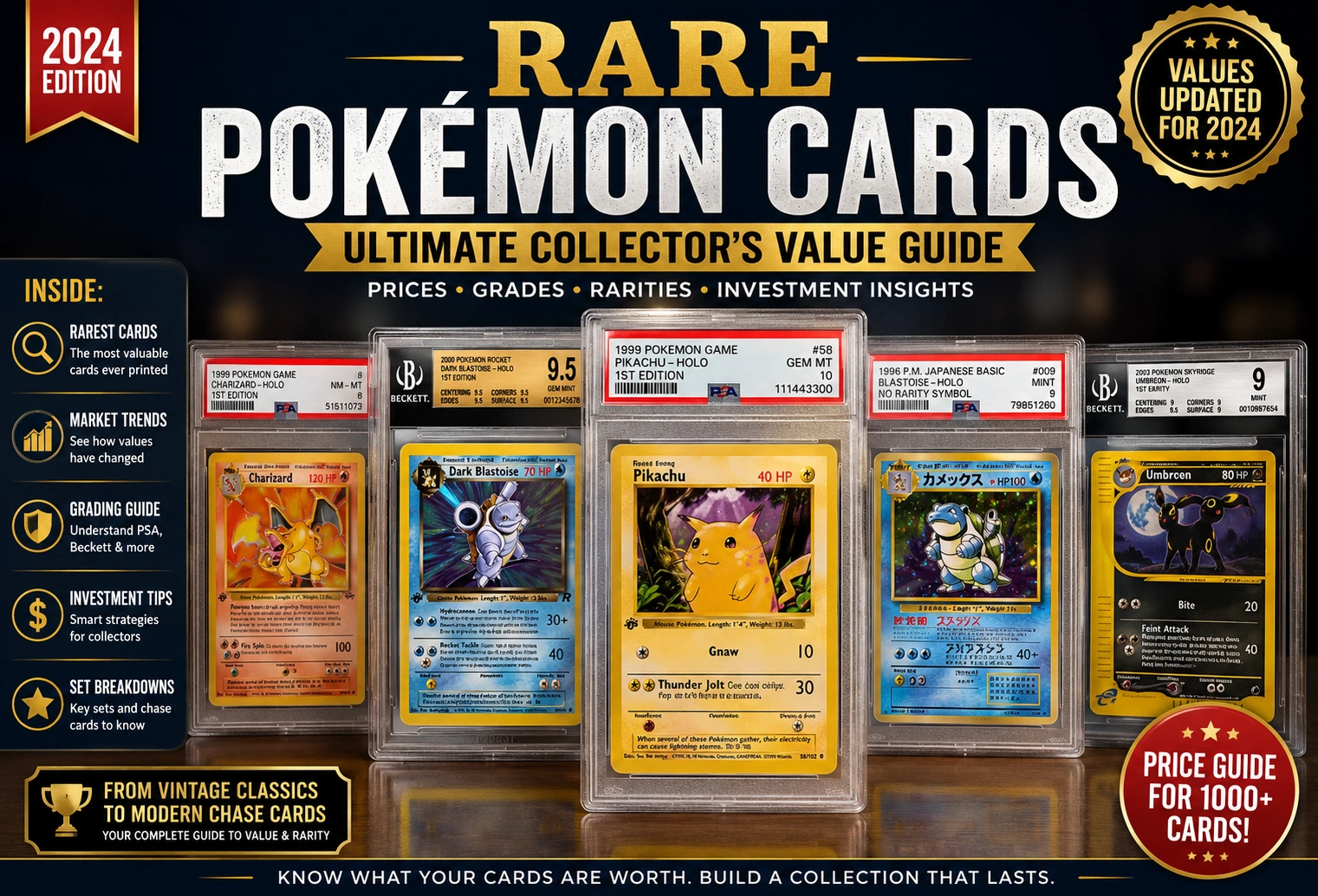
Rare Pokémon cards have become one of the most sought-after collectibles in the world. What started as a popular trading card game has grown into a global hobby, with some cards selling for thousands—or even hundreds of thousands—of dollars at auctions and private sales.
However, not every old Pokémon card is valuable. A card’s rarity depends on factors such as its print run, edition, condition, artwork, popularity, and professional grading.
Whether you’re sorting through an old binder, starting a new collection, or looking to invest, this guide explains everything you need to know about rare Pokémon cards, including what makes them valuable and which cards collectors search for most.
Quick Answer
A rare Pokémon card is typically one that has:
- A limited print run
- High collector demand
- Excellent condition
- A rare rarity symbol or special artwork
- Professional grading from a respected grading company
- Historical or tournament significance
The rarest cards can be worth anywhere from a few hundred dollars to hundreds of thousands of dollars, while many modern rare cards are affordable for everyday collectors.
What Makes a Pokémon Card Rare?
Several factors determine whether a Pokémon card is considered rare.
1. Rarity Symbol
Most Pokémon cards include a rarity symbol near the card number.
Common symbols include:
- Circle – Common
- Diamond – Uncommon
- Star – Rare
Modern sets also include Ultra Rare, Secret Rare, Illustration Rare, Hyper Rare, and other premium rarity levels.
2. Limited Print Runs
Cards printed in small quantities naturally become more difficult to find over time.
Examples include:
- Promotional cards
- Tournament prize cards
- Championship cards
- Limited event releases
3. Card Condition
Condition plays a major role in value.
Collectors generally look for cards with:
- Sharp corners
- No scratches
- Centered printing
- Clean edges
- Minimal wear
A mint-condition card is usually worth far more than a heavily played copy.
4. Professional Grading
Third-party grading companies evaluate authenticity and condition.
High grades often increase a card’s value because buyers have greater confidence in its quality.
Types of Rare Pokémon Cards
Collectors often focus on these categories.
First Edition Cards
First Edition cards from early Pokémon sets remain among the most collectible.
Shadowless Cards
Shadowless Base Set cards were printed before the standard shadow border was added, making them especially desirable.
Holographic Cards
Classic holographic cards remain favorites among collectors.
Secret Rare Cards
These cards often have collector numbers that exceed the official set size.
Alternate Art Cards
Modern alternate-art cards feature unique artwork and are highly popular.
Illustration Rare Cards
Recent Pokémon sets have introduced highly detailed illustration cards that have become collector favorites.
Promotional Cards
Event-exclusive and promotional releases often become scarce over time.
15 of the Most Valuable Rare Pokémon Cards
While values fluctuate with the market, these cards consistently rank among the hobby’s most desirable.
- Pikachu Illustrator
- First Edition Charizard (Base Set)
- Trophy Pikachu cards
- Kangaskhan Parent/Child Tournament card
- No. 1 Trainer cards
- Lugia (Neo Genesis)
- Rayquaza Gold Star
- Umbreon Gold Star
- Espeon Gold Star
- Blastoise Commission Presentation card
- Crystal Charizard
- Shining Charizard
- Mew Gold Star
- Latias & Latios GX Alternate Art
- Modern Special Illustration Rare Charizard cards
These cards are prized for their rarity, history, artwork, or competitive significance.
How to Identify Rare Pokémon Cards
When checking your collection, examine several details.
Look for the Rarity Symbol
Most cards display a symbol near the card number.
Check the Set Number
Secret Rare cards often have numbering beyond the standard set count.
Example:
210/198
Examine the Card Finish
Look for:
- Holographic foil
- Full-art designs
- Textured surfaces
- Gold foil
- Special borders
Check the Edition
Vintage First Edition cards often command higher prices than unlimited editions.
Factors That Affect Card Value
A card’s rarity alone doesn’t determine its worth.
Other factors include:
Condition
Mint cards usually sell for significantly more than heavily played cards.
Demand
Popular Pokémon such as:
- Charizard
- Pikachu
- Umbreon
- Rayquaza
- Mewtwo
often attract stronger collector interest.
Grading Score
Professional grading can improve buyer confidence and resale value.
Market Trends
Prices rise and fall depending on collector demand, new releases, and overall hobby interest.
Should You Invest in Rare Pokémon Cards?
Pokémon cards can appreciate in value, but like any collectible, there are risks.
Potential benefits include:
- Long-term appreciation
- Enjoyable hobby
- Strong collector community
- Limited releases
Potential drawbacks include:
- Market fluctuations
- Counterfeit cards
- Grading costs
- Storage requirements
It’s best to collect cards you genuinely enjoy rather than relying solely on future price increases.
Tips for Buying and Selling Rare Pokémon Cards
If you’re buying:
- Purchase from reputable sellers.
- Ask for clear photos.
- Verify authenticity.
- Compare recent sales.
- Understand grading standards.
If you’re selling:
- Describe condition honestly.
- Use protective packaging.
- Include high-quality images.
- Research current market prices.
- Consider professional grading for valuable cards.
How to Protect Your Collection
Proper storage helps preserve card condition.
Recommended supplies include:
- Penny sleeves
- Top loaders
- Binder pages
- Semi-rigid holders
- Storage boxes
- Low-humidity storage
Avoid direct sunlight, moisture, and excessive heat.
Common Mistakes New Collectors Make
Many beginners accidentally reduce a card’s value.
Avoid these common mistakes:
- Touching card surfaces with bare fingers.
- Storing cards without sleeves.
- Cleaning cards aggressively.
- Assuming every old card is valuable.
- Ignoring condition when pricing cards.
Learning basic preservation techniques can protect your investment.
Expert Tips
- Learn how rarity symbols work.
- Keep valuable cards sleeved immediately after opening.
- Stay informed about new set releases.
- Focus on quality over quantity.
- Build a collection around Pokémon or artwork you enjoy.
9. FAQs
1. What makes Pokémon cards rare?
Limited print runs, high demand, special rarity levels, card condition, and professional grading all contribute to rarity and value.
2. Are all old Pokémon cards valuable?
No. While some vintage cards are worth significant amounts, many older cards have modest value. Rarity, condition, and demand are key factors.
3. How can I tell if my Pokémon card is rare?
Check the rarity symbol, set number, edition, artwork, and whether the card has holographic or special finishes.
4. Should I get my Pokémon cards graded?
If you own a potentially valuable card in excellent condition, professional grading may increase buyer confidence and improve resale potential.
5. How should I store rare Pokémon cards?
Use protective sleeves, rigid holders or binders, keep them in a cool, dry place, and avoid direct sunlight or moisture.
10. Conclusion
Collecting rare Pokémon cards combines nostalgia, strategy, and the excitement of discovering unique collectibles. While some cards become valuable because of limited availability or historical significance, others gain popularity through stunning artwork, competitive play, or strong fan demand.
Whether you’re a beginner opening your first booster pack or an experienced collector searching for high-end vintage cards, understanding rarity, condition, grading, and market trends will help you make informed decisions. By protecting your collection and buying from trusted sources, you can enjoy the Pokémon Trading Card Game while building a collection that may hold both personal and financial value for years to come.
Discover More Articles
2 Inches: Size Guide, Conversions & Everyday Examples