
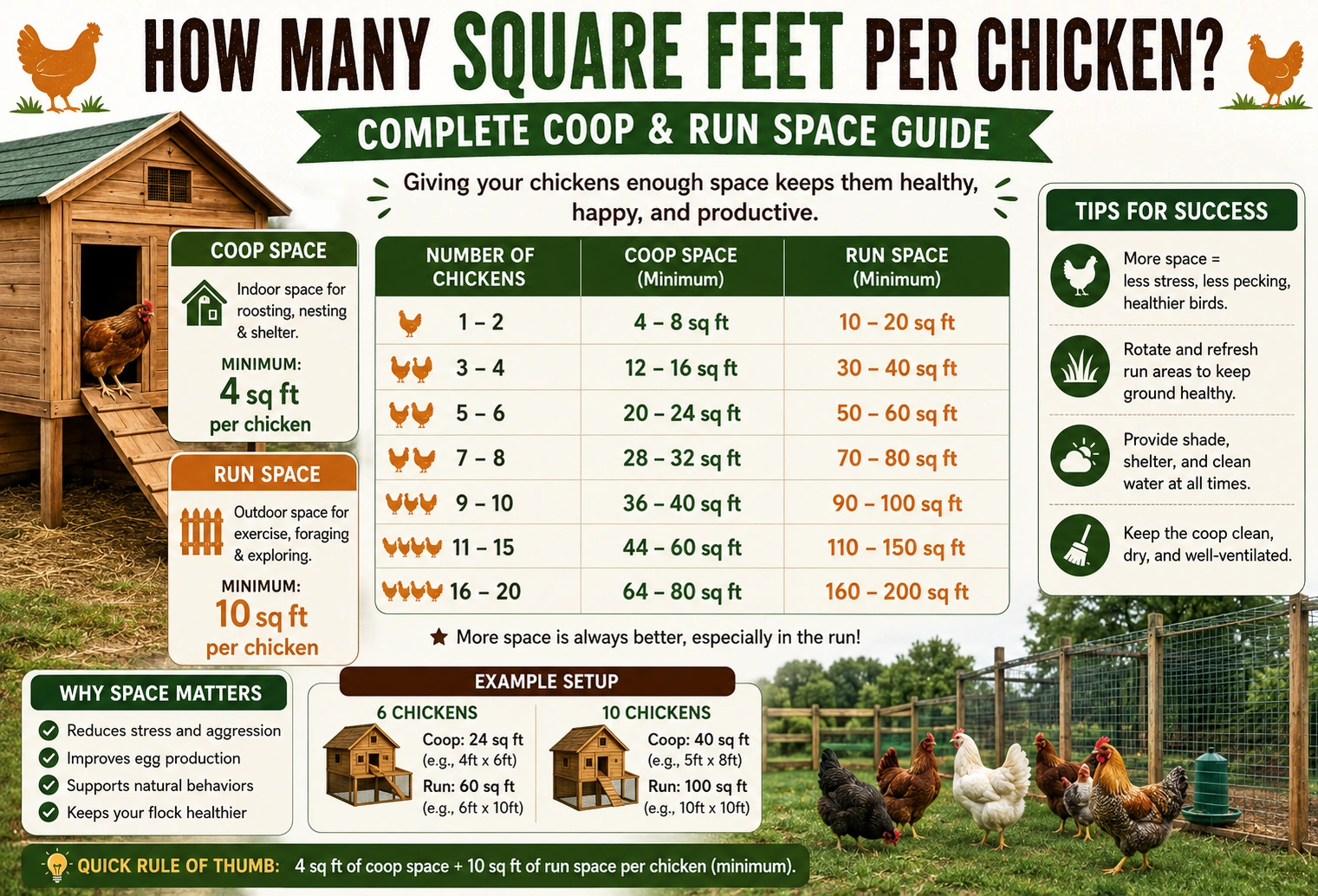
If you’re planning to raise backyard chickens, one of the first questions you’ll likely ask is how many square feet per chicken you need. Providing adequate space is one of the most important factors in keeping a healthy, productive flock.
Too little room can lead to stress, feather pecking, disease, and lower egg production. On the other hand, giving chickens enough space helps them stay active, clean, and happy.
The general rule is:
- 4 square feet per chicken inside the coop
- 10 square feet per chicken in an outdoor run
However, the ideal amount depends on breed size, climate, management style, and whether your chickens have access to free-range areas.
This guide explains everything you need to know about chicken space requirements and how to determine the right coop and run size for your flock.
Quick Answer: Space Requirements Per Chicken
For most backyard flocks, poultry experts recommend:
| Area | Space Per Chicken |
|---|---|
| Chicken Coop | 4 sq ft |
| Outdoor Run | 10 sq ft |
| Free-Range Access | 50–250+ sq ft |
These recommendations provide enough room for chickens to move comfortably while reducing stress and health problems.
Why Space Matters for Chickens
Many new chicken owners underestimate the importance of proper spacing.
Chickens are social animals, but they still need personal space to:
- Eat comfortably
- Establish pecking order
- Rest without disturbance
- Lay eggs peacefully
- Exercise naturally
When chickens are overcrowded, several issues can develop.
Problems Caused by Overcrowding
- Feather picking
- Aggressive behavior
- Increased disease spread
- Dirty living conditions
- Reduced egg production
- Higher stress levels
- Poor air quality inside the coop
Providing adequate square footage helps prevent these problems before they start.
Recommended Coop Space Per Chicken
The coop is where chickens sleep, lay eggs, and seek shelter from weather and predators.
Standard Backyard Chickens
For average-sized laying hens:
4 square feet per chicken inside the coop
Examples:
| Number of Chickens | Minimum Coop Size |
|---|---|
| 4 | 16 sq ft |
| 6 | 24 sq ft |
| 8 | 32 sq ft |
| 10 | 40 sq ft |
Bantam Chickens
Bantams are smaller than standard chickens.
They typically require:
2–3 square feet per bird
Because of their smaller size, they can comfortably live in slightly tighter quarters.
Large Chicken Breeds
Large breeds such as:
- Jersey Giants
- Brahmas
- Cochins
Need more room.
Experts often recommend:
5–6 square feet per bird inside the coop
Recommended Outdoor Run Space Per Chicken
The outdoor run allows chickens to exercise, forage, and enjoy fresh air.
The common recommendation is:
10 square feet per chicken
For example:
| Number of Chickens | Run Size Needed |
|---|---|
| 4 | 40 sq ft |
| 6 | 60 sq ft |
| 10 | 100 sq ft |
| 20 | 200 sq ft |
More space is always beneficial.
If your yard allows it, providing 15–20 square feet per chicken can significantly improve flock welfare.
Free-Range vs Confined Chickens
The amount of space needed depends heavily on your management style.
Fully Confined Flock
Chickens that stay in a coop and run all day need more dedicated space.
Minimum:
- 4 sq ft coop space
- 10 sq ft run space
Free-Range Chickens
Free-range birds spend much of the day outside.
They often require less run space because they have access to larger areas.
Many poultry keepers provide:
- 50–250 square feet per bird
- Sometimes even more
This allows natural behaviors such as:
- Scratching
- Dust bathing
- Hunting insects
- Exploring
Chicken Coop Size Chart
Here’s a handy reference chart.
| Chickens | Coop Size | Run Size |
|---|---|---|
| 2 | 8 sq ft | 20 sq ft |
| 4 | 16 sq ft | 40 sq ft |
| 6 | 24 sq ft | 60 sq ft |
| 8 | 32 sq ft | 80 sq ft |
| 10 | 40 sq ft | 100 sq ft |
| 12 | 48 sq ft | 120 sq ft |
| 15 | 60 sq ft | 150 sq ft |
| 20 | 80 sq ft | 200 sq ft |
Using this chart can simplify planning for future flock expansion.
How to Calculate Coop Size for Your Flock
Calculating the required square footage is easy.
Formula
Coop Size = Number of Chickens × 4
Run Size = Number of Chickens × 10
Example: 4 Chickens
Coop:
4 × 4 = 16 sq ft
Run:
4 × 10 = 40 sq ft
Example: 6 Chickens
Coop:
6 × 4 = 24 sq ft
Run:
6 × 10 = 60 sq ft
Example: 10 Chickens
Coop:
10 × 4 = 40 sq ft
Run:
10 × 10 = 100 sq ft
Example: 20 Chickens
Coop:
20 × 4 = 80 sq ft
Run:
20 × 10 = 200 sq ft
This simple calculation works for most backyard flocks.
Signs Your Chickens Need More Space
Even if your coop meets minimum guidelines, chickens may indicate they need additional room.
Watch for:
Feather Pecking
Birds begin pulling feathers from flock mates.
Increased Aggression
Fighting and bullying become more frequent.
Dirty Coop Conditions
Waste accumulates quickly and odors increase.
Reduced Egg Production
Stress often causes hens to lay fewer eggs.
Constant Noise
Stressed chickens may become unusually vocal.
If these issues appear, expanding available space may help.
Common Mistakes When Planning Chicken Space
Building Too Small
Many people start with a few chickens and later add more.
Planning extra room from the beginning can save money and effort.
Ignoring Breed Size
Large breeds need more square footage than smaller hens.
Forgetting Ventilation
Adequate airflow is just as important as floor space.
Not Considering Winter
Chickens often spend more time indoors during cold weather.
Extra coop space becomes especially important during winter months.
Underestimating Future Growth
Most chicken keepers eventually expand their flock.
Designing a slightly larger coop now prevents costly upgrades later.
Expert Tips for Happy and Healthy Chickens
Give More Than the Minimum
Minimum guidelines work, but extra space often results in healthier birds.
Add Multiple Feeders
This reduces competition during feeding.
Provide Roost Space
Each chicken should have approximately:
8–12 inches of roosting space
Include Dust Bath Areas
Dust baths help chickens control parasites naturally.
Rotate Run Areas
Rotating outdoor areas keeps grass healthier and reduces mud buildup.
Plan for Expansion
If you think you’ll add chickens later, build larger than your current needs.
9. FAQs
How many square feet per chicken in a coop?
Most standard-sized chickens need 4 square feet per bird inside the coop.
How many square feet per chicken in a run?
A minimum of 10 square feet per chicken is recommended for outdoor runs.
Can chickens live with less space?
They can, but overcrowding increases stress, aggression, and disease risks.
Do free-range chickens need less coop space?
No. Coop space requirements generally remain the same, although run space can sometimes be reduced.
How much space do 10 chickens need?
A flock of 10 chickens should have approximately:
- 40 square feet of coop space
- 100 square feet of run space
10. Conclusion
Understanding how many square feet per chicken is essential for raising a healthy and productive flock. As a general rule, provide at least 4 square feet per chicken inside the coop and 10 square feet per chicken in the outdoor run. Larger breeds may require additional room, while free-range birds benefit from significantly more outdoor space.
When in doubt, give your chickens more space than the minimum recommendations. A spacious coop and run can improve flock health, reduce stress, increase egg production, and make chicken keeping more enjoyable for both you and your birds.
Discover More Articles
How Many Bones Are in Your Feet? Complete Foot Anatomy Guide