
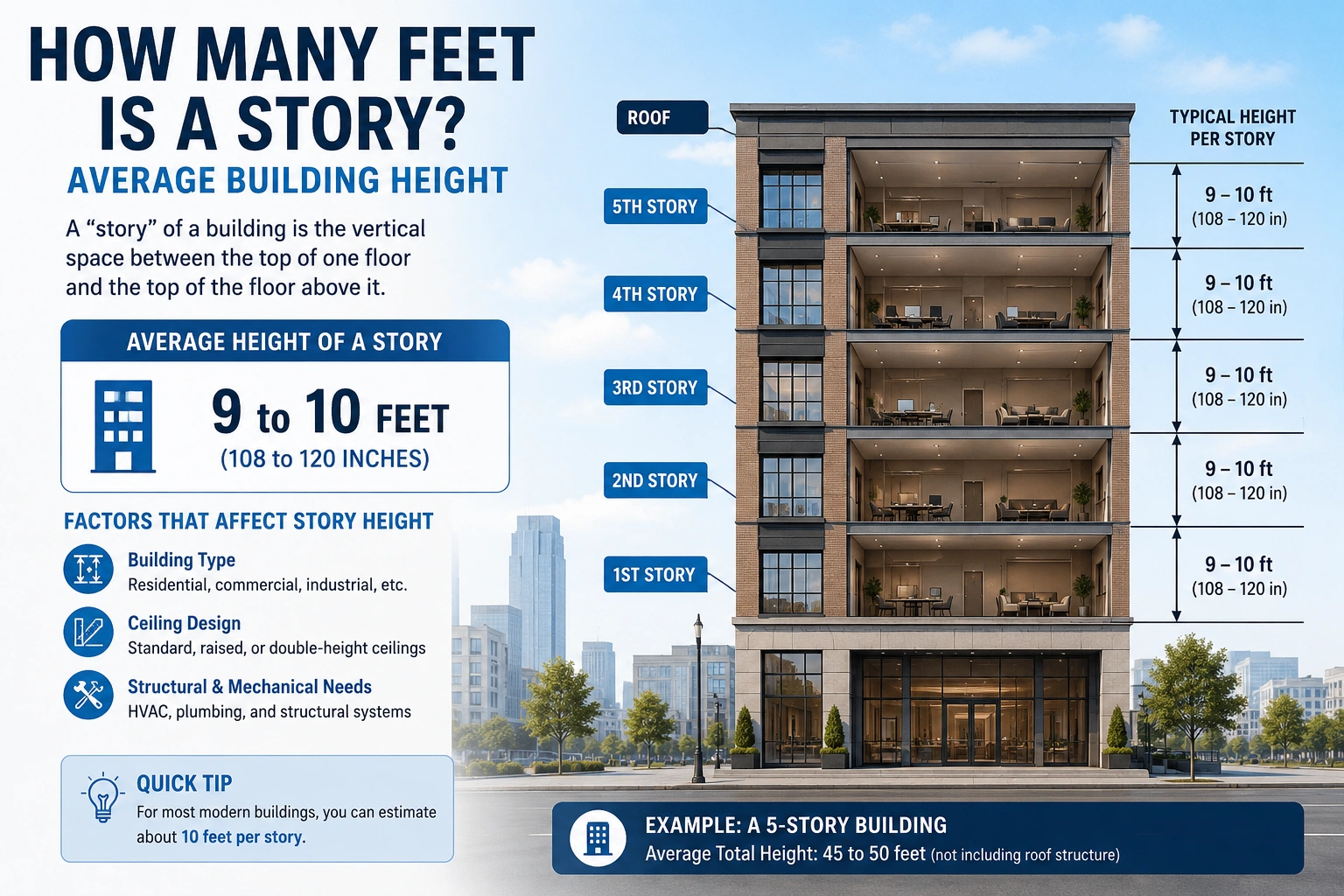
If you are wondering “how many feet is a story,” the typical answer is:
1 story≈10 to 14 feet
So, one building story is usually between 10 and 14 feet tall.
However, the exact height depends on:
- Building type
- Ceiling height
- Floor thickness
- Construction style
- Commercial or residential design
This measurement is commonly used in:
- Construction
- Real estate
- Architecture
- Building inspections
- Property development
In this complete guide, you will learn:
- The average height of a story in feet
- Residential vs commercial story heights
- Story-to-feet conversion charts
- Real-world building examples
- Common mistakes
- Expert estimating tips
Let’s begin.
Quick Answer for Story Height
The average building story height is:
| Building Type | Average Height |
|---|---|
| Residential story | 10 feet |
| Modern residential story | 10–12 feet |
| Commercial story | 12–14 feet |
| High-rise story | 14 feet or more |
Most homes use:
- About 10 feet per story
Commercial buildings often use:
- Taller floors for utilities and ceilings
Understanding Building Stories
Before estimating building height, it helps to understand what a story means.
What Is a Story?
A story is:
- One complete floor level in a building
Stories are stacked vertically in:
- Houses
- Apartment buildings
- Offices
- Hotels
- Skyscrapers
Residential Story Heights
Most residential homes use:
- 8-foot ceilings
- Plus floor and roof structure
This usually creates:
- A total story height near 10 feet
Commercial Story Heights
Commercial buildings often require:
- Larger ceilings
- HVAC systems
- Electrical systems
- Sprinkler systems
As a result:
- Commercial stories are taller
How Many Feet Is One Story?
Story height varies depending on the building type.
Standard Residential Height
Most residential buildings average:
1 residential story≈10 feet
This includes:
- Ceiling space
- Floor thickness
- Structural materials
Commercial Building Height
Commercial stories are usually:
1 commercial story≈12 to 14 feet
This extra space allows room for:
- Air ducts
- Lighting
- Plumbing
- Mechanical systems
High-Rise Story Heights
Skyscrapers may use:
- Taller lobby levels
- Mechanical floors
- Luxury ceiling heights
Some stories exceed:
- 15 feet
Story to Feet Conversion Chart
Here is a quick conversion chart.
| Stories | Approximate Height |
|---|---|
| 1 story | 10–14 ft |
| 2 stories | 20–28 ft |
| 3 stories | 30–42 ft |
| 5 stories | 50–70 ft |
| 10 stories | 100–140 ft |
This chart provides rough building estimates.
What Affects Story Height?
Several factors determine how tall a story becomes.
Ceiling Height
Higher ceilings increase total story height.
Modern luxury homes may feature:
- 10-foot or 12-foot ceilings
Floor Thickness
Structural floors include:
- Wood
- Steel
- Concrete
Thicker materials increase building height.
Building Type
Different buildings require different heights.
Examples:
- Warehouses use tall ceilings
- Offices need utility space
- Homes use smaller floor heights
Roof Design
Roof structures may add:
- Extra height above the top story
Real-World Examples of Story Heights
Visual examples help make measurements easier to understand.
One-Story Homes
Most one-story homes stand around:
- 10 to 15 feet tall
Including the roof.
Two-Story Houses
Typical two-story homes are often:
- 20 to 25 feet tall
Depending on roof shape.
Office Buildings
Commercial offices may average:
- 12 to 14 feet per story
A 10-story office building could reach:
- 120 to 140 feet
Why Story Height Matters
Understanding story height helps in many situations.
Construction
Builders use story height for:
- Structural planning
- Material estimates
- Building permits
Real Estate
Property listings often mention:
- Number of stories
Instead of exact height.
Fire Safety
Emergency services use building height for:
- Rescue planning
- Equipment access
Architecture
Architects carefully plan:
- Ceiling height
- Floor spacing
- Structural systems
Common Mistakes About Story Height
Simple misunderstandings can cause inaccurate estimates.
Assuming All Stories Are Equal
Residential and commercial stories differ greatly.
Ignoring Roof Height
Roofs can add:
- Several extra feet
Above the final story.
Forgetting Mechanical Floors
Commercial buildings often include:
- Utility levels
- Equipment spaces
Confusing Ceiling Height with Story Height
Ceiling height is only part of total story height.
Expert Tips for Estimating Building Height
These tricks help estimate story height more accurately.
Use 10 Feet per Residential Story
This is a quick and common estimate.
Use 12–14 Feet for Commercial Buildings
Commercial structures generally require more space.
Compare with Nearby Objects
Cars, doors, and people help estimate scale visually.
Review Building Plans
Architectural plans provide the most accurate measurements.
Practical Situations Where Story Height Matters
Story height calculations are useful for:
- Real estate purchases
- Construction planning
- Building inspections
- Architecture projects
- Ladder sizing
- Emergency response
FAQs
How many feet is one story exactly?
Most residential stories are about:
- 10 feet tall
Commercial stories are often:
- 12–14 feet tall
How tall is a two-story house?
Most two-story homes are:
- About 20–25 feet tall
Including the roof.
Why are commercial stories taller?
Commercial buildings need extra space for:
- HVAC systems
- Lighting
- Plumbing
- Utility equipment
Are all building stories the same height?
No. Story height varies by:
- Building type
- Design
- Construction method
How tall is a 10-story building?
A 10-story building is usually:
- 100–140 feet tall
Depending on usage and design.
Conclusion
So, how many feet is a story?
The typical answer is:
- About 10 to 14 feet
1 story≈10 to 14 feet
Understanding story height helps with:
- Construction planning
- Real estate comparisons
- Architecture
- Building design
- Property evaluation
Once you understand standard story heights, estimating building size and height becomes much easier for homes, offices, and commercial structures.
Discover More Articles
How Many Feet Is 61 Inches? Exact Conversion Guide