

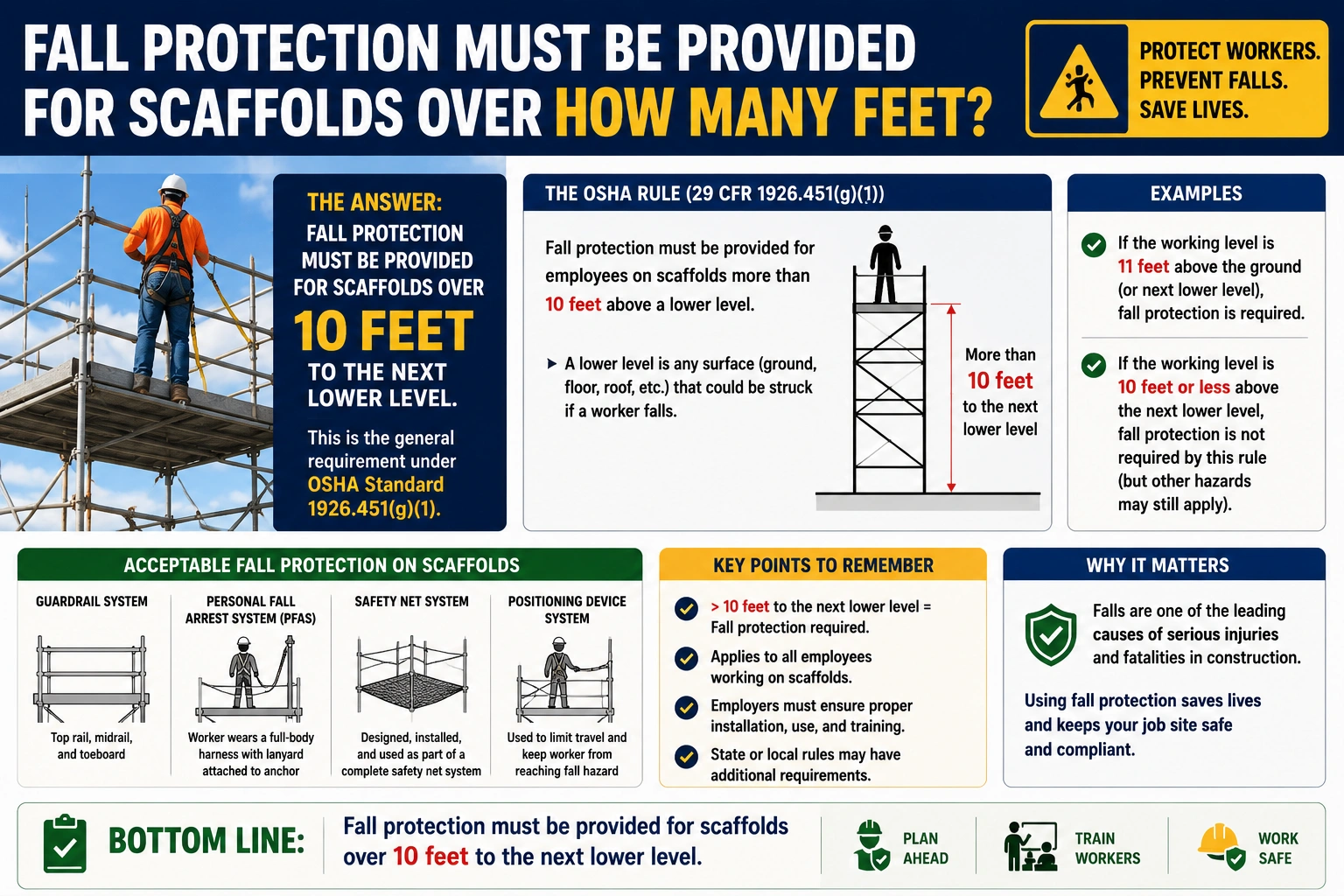
If you work in construction or industrial environments, you may ask: fall protection must be provided for scaffolds over how many feet?
This is one of the most important workplace safety questions because falls are a leading cause of serious injuries and fatalities on job sites.
According to OSHA scaffold safety standards:
👉 Fall protection is generally required for scaffolds more than 10 feet above a lower level.
Understanding these rules helps employers and workers maintain safer job sites and avoid costly violations.
In this guide, you’ll learn OSHA scaffold requirements, types of fall protection, common hazards, and important safety tips.
Quick Answer: OSHA Scaffold Height Rule
👉 OSHA requires fall protection for employees working on scaffolds more than 10 feet above a lower level.
This means:
- At 10 feet or lower → rules may differ
- Over 10 feet → fall protection is required
OSHA Scaffold Fall Protection Requirements
OSHA regulations are designed to reduce fall-related injuries.
The most common protection systems include:
- Guardrail systems
- Personal fall arrest systems
- Safety harnesses
OSHA Scaffold Rule
OSHA states:
Fall Protection Required>10 feet
This rule applies to many scaffold types used in construction and maintenance work.
Why Scaffold Fall Protection Matters
Falls from scaffolds can cause:
- Broken bones
- Head injuries
- Permanent disability
- Fatal accidents
Proper protection saves lives.
Common Causes of Scaffold Falls
Workers may fall because of:
- Missing guardrails
- Slippery platforms
- Unsafe climbing methods
- Poor scaffold assembly
- Lack of training
Types of Scaffold Fall Protection
Several systems help protect workers.
Guardrail Systems
Guardrails are one of the most common safety methods.
They help prevent workers from:
- Stepping off edges
- Losing balance
- Falling from elevated platforms
Personal Fall Arrest Systems (PFAS)
These systems include:
- Full-body harnesses
- Lanyards
- Anchors
They stop falls before workers hit lower levels.
Safety Nets
Some job sites use safety nets below work areas for added protection.
OSHA Scaffold Safety Standards
OSHA scaffold standards cover:
- Platform construction
- Weight limits
- Fall protection
- Access methods
- Inspections
Employers must ensure workers follow all safety rules.
Scaffold Height and Risk Levels
| Scaffold Height | Fall Protection Requirement |
|---|---|
| 10 feet or less | May vary |
| Over 10 feet | Required by OSHA |
| 20+ feet | Additional safety planning often needed |
Real-Life Scaffold Safety Examples
Residential Construction
Workers installing siding on a two-story home often work:
- More than 10 feet above ground
👉 Fall protection is required.
Commercial Building Project
Scaffold workers on tall buildings must use:
- Guardrails
- Harness systems
- Safe access ladders
Painting and Maintenance
Painters using elevated scaffolds also need protection once above OSHA height limits.
Why the 10-Foot Rule Exists
OSHA determined that falls above 10 feet create significant injury risk.
Even relatively short falls can lead to:
- Severe trauma
- Long-term disability
- Death
Common Scaffold Hazards
Unstable Ground
Scaffolds placed on uneven surfaces can tip over.
Overloading Platforms
Too much weight increases collapse risk.
Missing Guardrails
Open sides create serious fall hazards.
Weather Conditions
Rain and wind make scaffold work more dangerous.
Common Mistakes Workers Make
Not Wearing Harnesses
Workers sometimes skip protective equipment for convenience.
Climbing Scaffold Frames
Improper climbing methods increase fall risk.
Ignoring Inspections
Damaged scaffolds should never be used.
Using Incomplete Platforms
Gaps in platforms create tripping hazards.
Tips for Scaffold Safety Compliance
Inspect Daily
Scaffolds should be inspected before each shift.
Use Proper Training
Workers must understand:
- Hazard recognition
- Equipment use
- Emergency procedures
Maintain Three Points of Contact
Always climb safely using proper access methods.
Follow Weight Limits
Never overload scaffold platforms.
Scaffold Inspection Requirements
A competent person should inspect scaffolds for:
- Structural damage
- Loose components
- Guardrail issues
- Platform stability
Unsafe scaffolds must be repaired immediately.
Personal Protective Equipment (PPE)
Workers often need:
- Hard hats
- Non-slip footwear
- Safety harnesses
- High-visibility clothing
OSHA Penalties for Violations
Failure to provide proper scaffold fall protection can lead to:
- Expensive OSHA fines
- Job shutdowns
- Increased liability
More importantly, unsafe practices can result in serious injuries.
Quick Safety Rule to Remember
👉 Over 10 feet = fall protection required
This is one of the most important scaffold safety rules.
Scaffold Safety Best Practices
Good scaffold safety includes:
- Proper assembly
- Secure platforms
- Safe climbing access
- Fall protection systems
- Ongoing inspections
Why Safety Training Matters
Training helps workers:
- Recognize hazards
- Use equipment correctly
- Prevent accidents
- Respond to emergencies
Well-trained workers are safer workers.
9. FAQs
1. Fall protection must be provided for scaffolds over how many feet?
OSHA generally requires fall protection for scaffolds over 10 feet high.
2. What types of fall protection are used on scaffolds?
Guardrails, harnesses, and personal fall arrest systems.
3. Why is scaffold fall protection important?
It prevents serious injuries and fatalities from falls.
4. Does OSHA require scaffold inspections?
Yes, scaffolds should be inspected regularly by a competent person.
5. What is the most common scaffold hazard?
Falls caused by missing guardrails or unsafe work practices.
10. Conclusion
So, fall protection must be provided for scaffolds over how many feet?
👉 OSHA generally requires fall protection for scaffolds more than 10 feet above a lower level.
This important safety rule helps reduce:
- Workplace injuries
- Serious falls
- Construction fatalities
Scaffold safety should always include:
- Proper guardrails
- Personal fall arrest systems
- Safe climbing methods
- Daily inspections
- Worker training
Employers and workers both play an important role in maintaining safe job sites.
Remember this simple rule:
Over 10 Feet=Fall Protection Required
Understanding OSHA scaffold requirements not only helps businesses stay compliant, but more importantly, it protects lives.
Whether you work on residential homes, commercial buildings, or industrial projects, proper scaffold fall protection is essential for creating a safer and more responsible workplace.
Discover More Articles
How Many Feet in a Football Field? Complete Guide